 Trending
Transparency Building
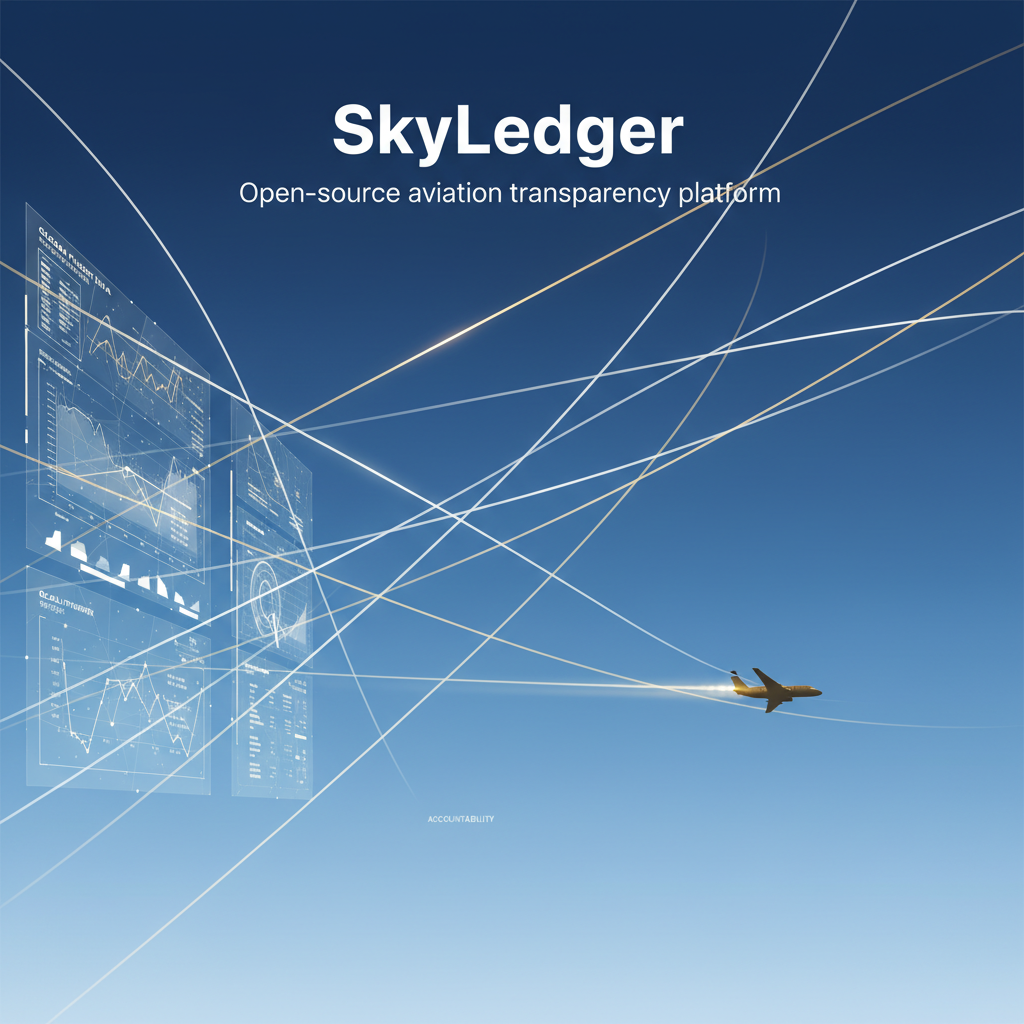
SkyLedger
Track what's being sprayed above us — facts, photos, and accountability
Progress 70%
Claude Vibe Coder App Development Aviation Knowledge
+4 more
Rex 2 34

A community hub where great ideas meet the people who can build them — collaborative, open source, and focused on humanity instead of profit.
Have an idea? Drop it on the board. Have skills? Find a project that matters. Transparency builds trust. Open source means you can see every line and know it's here to serve people.
Three steps. No gatekeepers. No corporate agenda. Just people building solutions.
Someone identifies a problem — privacy erosion, government opacity, health data locked behind paywalls. Real problems affecting real people.
They write up the problem, the vision, and what skills are needed. A simple page goes up. The project is born.

People rally. Developers write code. Designers create interfaces. Researchers dig in. The project gets built — in the open, for everyone.
Real problems. Real solutions. Built by people like you.
Trending
Track what's being sprayed above us — facts, photos, and accountability
 Trending
Recovering the original message — his words, the evidence, and what every tradition confirmed


Community-powered air quality monitoring — because you deserve to know what you're breathing
Know what your local government is doing. We make it easy to have your voice heard and know where the front lines are.
AI powerful enough to cause the problem is powerful enough to solve it

Neighbors helping neighbors — a persistent, privacy-respecting platform for community support

Got an idea that could help people? Pin it to the board. No commitment, no obligation — someone might run with it.
Corporate buyers are paying peanut farmers $380/ton when they used to get $700-800 in the 1980s. Corn farmers are in the same boat. But the ones selling direct — to hunters, ranchers, and consumers online — are thriving. We need a free, open marketplace that connects farmers directly to local buyers, restaurants, and other farmers. No monthly fees. No corporate middlemen. Farmer sets the price, buyer pays it, nobody skims off the top. Every existing platform either charges $99-399/month or is just a listing directory. The gap is massive.
Social media was supposed to connect us. Instead, the algorithms are designed to keep us angry and scrolling because that's what sells ads. The platforms decide what you see, who you reach, and what gets suppressed — and you'll never know why because the algorithm is a black box. What if there was a social platform where the algorithm is open source — anyone can read it, audit it, and verify it's not manipulating them? No ads funding the machine. No shadow banning. No invisible hand deciding which opinions get amplified and which get buried. Just people talking to people, with transparent rules that everyone can see. Open algorithms. No censorship within legal boundaries. Not predatory for attention. No shadow banning. No ads. Transparency maxxing. Unbiased opinions. Unfiltered news. The question is whether this needs blockchain for true decentralization (no single entity can shut it down) or whether open-source code with federated hosting gets us there. Either way, the core principle is the same: if you can't see how it works, it's not working for you.
Most people have no idea where their food comes from beyond "the grocery store." Build a community-maintained map of local farms, farmers markets, CSAs, community gardens, and food co-ops. Include what's in season, which farms use regenerative practices, and where to find raw milk, pastured eggs, and grass-fed meat directly from producers. Help people reconnect with their food supply and support local agriculture.
Most people own a drill they use twice a year. A lawn aerator they use once. A pressure washer collecting dust. What if neighborhoods had a simple app where you list tools you're willing to lend, browse what's available nearby, and coordinate pickups? No money changes hands. Just neighbors sharing resources. Reduces waste, saves money, builds community.
Textbooks cost families hundreds of dollars a year and go outdated fast. What if there was a community-maintained, open-source platform where teachers and subject matter experts collaboratively write and update free digital textbooks? Think Wikipedia meets Khan Academy but specifically for K-12 curriculum-aligned content. Teachers could fork and customize for their classroom.
Lobbying data exists but it's scattered across dozens of databases and filed in formats designed to be hard to analyze. Build a real-time dashboard that aggregates lobbying disclosures, campaign contributions, and revolving door data (who went from government to industry and back). Show the connections visually — network graphs of who's funding whom. Make it dead simple for journalists and citizens to follow the money.
Schools are deploying Gaggle, GoGuardian, and Bark to monitor everything students type, search, and say online — often without meaningful consent. These tools flag kids for "concerning" behavior based on keyword matching that's wildly inaccurate. We need open-source alternatives that help keep kids safe without building a surveillance infrastructure. Think safety features without the panopticon.
Got an idea, tip, or lead? Drop it here. 60 seconds. Zero obligation. You might spark something big.
These aren't just words. They're how we operate.
Every line of code is public. Every decision is transparent. No exceptions.
No shareholders. No ads. No data harvesting. Built to serve, not to sell.
Minimal data collection. Pseudonymous participation. Your identity is yours.
We don't just discuss problems. We build solutions. Ship or iterate.
You don't need to be a developer. You don't need funding. You just need a problem worth solving and the willingness to put it out there.